Kathrin talks with her eyes - and a little help from a computer
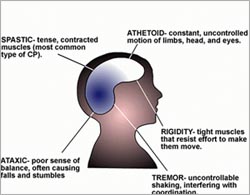 Berlin - Cerebral palsy is the medical term for the neurological disorder which has confined 24-year-old Kathrin Lemler to a wheelchair since childhood.
Most people would consider her life to be severely impaired but Kathrin from the central German state of Rhineland Palatinate literally does not see things that way. She uses her eyes to control a speech computer and the rest of her life too.
The irreversible brain damage caused by the illness means most of her muscles and limbs will not respond to the signals sent to them yet this remarkable young woman has triumphed over her handicap.
Kathrin Lemler has a zest for life. She is clever, courageous and nimble-witted. She recently won a creative writing competition organized by the nationwide "Aktion Mensch" charity with two entries. Both show that while she may be physically disabled, those who are unable to overcome prejudice when dealing with people like herself are equally handicapped.
Kathrin is studying education science at Cologne University and is determined not to have her progress checked by physical constraints or by people who underestimate her ability. Typical of the gentle irony which characterizes her writing is a description of the fuss caused by her straightforward application for a standard German identity card.
Apparently even the police had to be called since civil servants were unused to someone communicating solely via a computer. The second tale also illustrates the discomfiture felt by the able-bodied when they encounter people such as herself
In this instance Kathrin was able to give evidence in court on behalf of a bus driver who was wrongly accused of having caused a rear-end collision. The lawyer acting for the other party spent most of the time trying to discredit her as a witness. In the event, the judge believed the story as Kathrin told it.
"Many people simply do not know how to deal with someone who has a disability. Something in this society needs to change so that people with a handicap are accepted as normal members of society," Lemler believes.
In order to formulate the above sentence her eyes had to rove around a computer screen and find the correct letters. She "speaks" with a synthetic woman's voice. The computer attached to her wheelchair tracks her eyes as they move around the screen, registering the coordinates and turning these into letters. The device also helps by suggesting appropriate word endings so that Kathrin can express herself fluidly. With the aid of the machine the student is able to communicate without human assistance of any kind.
Her computer is called MyTobii and was developed by a Swedish company. She represents the firm at exhibitions and trade fairs, and demonstrates the device both at home and abroad. When her studies are finished Kathrin says she would like to help other "non-speaking people." That is one of the reasons why she likes to write and share her experiences. A book with the title "Kathrin talks with her eyes" has already gone into a second printing and is available in English too.
Technical aid is important but a key element of Kathrin's ability to get the message across is common to all human beings. Her facial expression plays an important part in communication. This is reflected in the title of her internet homepage which reads: "Not being able to laugh is worse than not being able to speak."
Indeed the laughter of this young woman can be infectious, especially when she recounts some of the absurdities of everyday life. While once checking in for a flight to Birmingham her boyfriend was asked by a counter assistant whether Kathrin would start screaming out loud if somebody touched her. "No, she bites," was his reply. Kathrin can show her claws in general conversation too. If she thinks people regard her as mentally deficient, she quickly remarks that "I graduated from high school you know so please treat me accordingly!"
Kathrin's enjoyment of life outweighs such frustrations and her homepage contains the story in the course of which she dreams what it would be like to live without disability. "I wrote that down when I was 16," says the young woman. Since then her ambitions have changed. "I want to settle down with my friend and get a normal job."
The earlier tale of what might have been ends with Kathrin imagining that she is a perfectly healthy woman standing at the ironing board: "I run my hands through my hair. Next to me is a pile of washing - I look around helplessly. What a stroke of luck that I will never have to worry about having to deal with the ironing, I say to myself and have a good chuckle." (dpa)
TopNews Hindi
- FSSAI की शराब कार्रवाई: मैकडॉवेल्स नंबर 1, Old Monk, Antiquity Blue, Royal Challenge पर बैन
- Karuppu, Parasakthi, Thaai Kizhavi, Blast and Kara Among Best Tamil Movies for 2026
- Anupama, YRKKH, Vasudha, Tum Se Tum Tak: सबसे ज़्यादा देखे जाने वाले धारावाहिक
- 2026 FIFA World Cup Current Rankings and Betting Odds for Sports Betting Fans
- JEE Main 2026: Exam Dates, Eligibility, Syllabus जेईई मेन 2026 परीक्षा की तारीखें, योग्यता, सिलेबस

