Washington

Fannie, Freddie get new government-appointed chairmen

Fannie, Freddie get new government-appointed chairmen Washington  - The US government on Tuesday appointed new chairmen to head troubled mortgage giants Fannie Mae and Freddie Mac, which were both taken over by regulators last week.

The Federal Housing Finance Agency (FHFA), the government regulator overseeing Fannie and Freddie, said it had appointed new non-executive chairman after firing the lenders' leadership last week as part of the government takeover.

US suspends Peace Corps mission in Bolivia

US suspends Peace Corps mission in Bolivia Washington  - The United States has suspended its Peace Corps activities in Bolivia over concerns about the safety of the volunteers serving in the country mired in political turmoil.
"We believe that this was a prudent step, based on the situation on the ground in Bolivia," State Department spokesman Sean McCormack said Tuesday.

The move to temporarily suspended the Peace Corps mission comes after Bolivian President Evo Morales expelled the US ambassador to the poor Andean nation, accusing him of fomenting political opposition.

More than 60 per cent of ‘climate envelope’ studies maybe wrong

Washington, September 16: A new research has cast doubts on the value of climate envelope models, saying more than 60 per cent of such studies maybe wrong.

According to a report in Nature News, estimates of the impact climate change will have on wildlife may be much less reliable than thought, with a research that is reopening debate over a widely used modelling method endorsed by the Intergovernmental Panel on Climate Change (IPCC).

‘Climate envelope’ models use current distributions of species to construct an idea of the climatic conditions that suit them. This ‘envelope’ can then be used to see where species could live under predictions of future climate.

Antidote to deadly black spider venom comes closer to reality

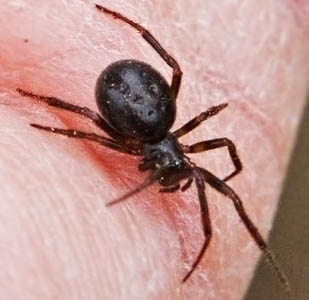
Black SpiderWashington, September 16: Studying the composition of brown recluse spider’s venom, scientists have identified a new family of chemicals that can be helpful in realising an effective antidote.

Study leader Frank Schroeder, a scientist at Cornell''s Boyce Thompson Institute and Department of Chemistry and Chemical Biology, says that his team has discovered chemicals known as sulfated nucleosides, which are based on one of the building blocks of RNA, a molecule in living cells that helps build proteins.

Discovery of mass tombs near Machu Picchu may shed light on the ancient city

Washington, September 16: The discovery of eighty skeletons and stockpiles of textiles, found in caves near the ancient Inca site of Machu Picchu in Peru, may shed light on the role that the so-called Lost City of the Inca played as a regional center of trade and power.

According to a report in National Geographic News, researchers found the artifacts and remains at two sites within the Machu Picchu Archaeological Park in southeastern Peru.

The remains, most of which were found in May 2008 at a site called Salapunku, probably date to 500 to 550 years ago, according to Francisco Huarcaya, the site's lead researcher.

Protein that may stop cancer spread identified

Washington, Sept 16: Researchers from Medical College of Wisconsin in Milwaukee have found a new synthetic form of protein that holds promise to stop cancer progression.

The protein CXCL12, also known as a chemokine, regulates the movement of cells into tissues and recruit infection-fighting white blood cells to infected and injured sites. They essentially act as homing beacons for the immune system.

“We hope that stable synthetic versions of CXCL12 will allow us to conduct proof-of-concept studies about cancer prevention,” said Brian Volkman, Ph. D., associate professor of biochemistry at the Medical College.

“It’s clear that CXCL12 is an important molecule for designing new ways to treat cancer,” he added.

Pages