Singapore - The Singapore Exchange (SGX) has proposed the creation of an integrated Asian stock market, its chief executive officer Hsieh Fu Hua said Monday.
He called on the ASEAN Exchanges and Central Securities Depositories (CSDs) to forge links that can be extended to the entire Asia-Pacific region.
"These multilateral gateways in trading, clearing and settlement will then help us create a single and more significant Asian marketplace," he said at the 12th general meeting of the Asia-Pacific Central Securities Depository Group in Singapore.
Tokyo - Japan's key Nikkei 225 Stock Average Monday crossed the 9,000-point threshold, ending morning trading up more than 5 per cent thanks to a strong rally on the US market before the weekend.
The Nikkei index surged 470.9 points, or 5.49 per cent, to 9,053.9.
The broader Topix index of all first-section issues was also up 36.52 points, or 4.15 per cent, to 915.52.
On currency markets at 9 am (0000 GMT), the dollar was quoted at 98.97-99.02 yen, up from Friday's 5 pm quote of 97.58-60 yen.
Indian equities closed the week positively on the back of heavy buying action witnessed in blue-chip stocks including Reliance Infra, Hindalco and Reliance Communication.
Power, oil & gas, metal and PSU stocks witnessed stock specific action. BSE Midcap and Smallcap index gained 1.11% and 0.51% respectively.
The 30-share index, BSE Sensex, on Friday (Nov 8), opened negatively for the third straight session at 9,631.59 after losing 102.59 points on rising global recessionary pressures.
New York - US stocks rose Friday, after two days of major declines, despite a sharp hike in unemployment and massive losses reported from major automakers.
The Wall Street rally was attributed to speculation that the Federal Reserve would lower interest rates next month to combat a surging unemployment rate. The US Labour Department reported Friday that unemployment climbed to 6.5 per cent in October, after another 240,000 jobs were lost in a worsening sign for the economy.
Amman - Arab stock markets reacted positively but cautiously to the election of Barack Obama as next US president with investors trying to evaluate the choices open to the new administration to deal with the gruelling economic downturn, financial analysts said Friday.
"Markets sighed relief over the election of Obama, because markets have been under the impression that McCain's win could aggravate the global financial crisis," Nizar Taher, chief of brokerage at the Jordan Ahli Bank, told Deutsche Presse-Agentur dpa.
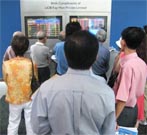 Singapore - The Singapore Exchange (SGX) has proposed the creation of an integrated Asian stock market, its chief executive officer Hsieh Fu Hua said Monday.
 Hong Kong - Hong Kong shares shot up by more than 5 per cent to break through the 15,000 point barrier in early trading Monday.
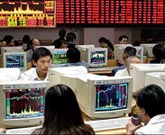 Tokyo - Japan's key Nikkei 225 Stock Average Monday crossed the 9,000-point threshold, ending morning trading up more than 5 per cent thanks to a strong rally on the US market before the weekend.
 Indian equities closed the week positively on the back of heavy buying action witnessed in blue-chip stocks including Reliance Infra, Hindalco and Reliance Communication.
 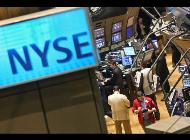 New York - US stocks rose Friday, after two days of major declines, despite a sharp hike in unemployment and massive losses reported from major automakers.
 Amman - Arab stock markets reacted positively but cautiously to the election of Barack Obama as next US president with investors trying to evaluate the choices open to the new administration to deal with the gruelling economic downturn, financial analysts said Friday.
