Los Angeles, April 7 : Each testimony in the latest hearing on prosecutorial misconduct in Anand Jon case was contradictory, sparking rumours that some members of the prosecutorial team may have committed perjury.
During the hearing, Brian Bennett, the supervising investigator on the case for the Los Angeles district attorney''s office, admitted that a juror was stopped from meeting Jon's sister Sanjana, reports LA Weekly.
Washington, Apr 7 : Commonly used osteoporosis drugs have not been found to increase the risk of irregular heartbeat, say research team led by Indian-origin scientist from Wake Forest University School of Medicine.
Bisphosphonates, found in prescription drugs reduces the risk of fractures, especially those of the spine and hips in older patients, however studies have revealed that they might cause problems with heart rhythm, thereby increasing the risk of stroke or heart attack.
Washington, Apr 7 : Children as young as eight who suffer from mental problems are more likely to contemplate or attempt suicide in later life, finds a new study.
While studying 5,302 Finnish individuals born in 1981, the researchers found that most males who commit suicide or need hospital care for suicide attempts during their teen or early adult years appear to have high levels of psychiatric problems at age 8.
The rates of mortality [death] by suicide have been found to be high among those with medically serious suicide attempts. For effective prevention, knowledge of the key risk factors for suicide is essential.
Washington, Apr 7 : Young adults, who carry a genetic variant that raises their risk of developing Alzheimer''s Disease (AD), have different brain activity than normal adults, according to a study.
Led by scientists from the University of Oxford and Imperial College London, the brain imaging study has revealed that young carriers of APOE4 genetic variant show changes in their brain activity decades before any symptoms might arise.
Washington, April 7 : Researchers at North Carolina University, US, have developed a device that controls electron spin at room temperature.
The researchers have designed a magnetic semiconductor memory device, using GaMnN thin films, which utilizes both the charge and spin of electrons at room temperature.
This is a major breakthrough, as previous devices that used magnetic semiconductors (GaMnAs) and controlled electron spin were only functional at 100 K (or -173 Celsius).
 Los Angeles, April 7 : Each testimony in the latest hearing on prosecutorial misconduct in Anand Jon case was contradictory, sparking rumours that some members of the prosecutorial team may have committed perjury.
 Washington, Apr 7 : Commonly used osteoporosis drugs have not been found to increase the risk of irregular heartbeat, say research team led by Indian-origin scientist from Wake Forest University School of Medicine.
 Washington, Apr 7 : Adult dogs and 2-year-old kids are similar when it comes to understanding human gestures, according to a new study.
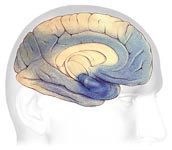 Washington, Apr 7 : Young adults, who carry a genetic variant that raises their risk of developing Alzheimer''s Disease (AD), have different brain activity than normal adults, according to a study.
 Washington, April 7 : Researchers at North Carolina University, US, have developed a device that controls electron spin at room temperature.
