Washington, Mar. 13: Expressing its fears that Iran''s nuclear program is a cover to build atomic weapons, the Obama administration has extended sanctions imposed on that country for one more year.
Tehran claims that it is enriching uranium to produce nuclear energy for civilian purposes.
Citing a continued "unusual and extraordinary threat to U. S. national security," President Obama on Thursday extended sanctions against Iran for one year in a public notice, reports Fox News.
Washington, March 13: The Cassini spacecraft has relayed information that it had successfully swapped to a backup set of propulsion thrusters late on March 11.
The swap was performed because of degradation in the performance of the primary thrusters, which had been in use since Cassini’s launch in 1997.
This is only the second time in Cassini’s 11 years of flight that the engineering teams have gone to a backup system.
Beijing - The wife and children of leading Chinese human rights lawyer Gao Zhisheng have escaped from close police surveillance and travelled via Thailand to the United States, US-funded Radio Free Asia reported Friday.
Gao's wife, Geng He; their 15-year-old daughter; and 5-year-old son walked into Thailand after fleeing from virtual house arrest in Beijing and crossing a border in southern China, the broadcaster quoted Geng as saying.
"I left China because my family had been under tight surveillance for a long time," she said.
"We experienced in our careers and daily life great hardship and difficulty," Geng added.
Washington, Mar 13: The US in still not willing to support a demand for the restoration of sacked judges, despite a change of government in Washington and, seems eager not to criticise the Zardari Government for its crackdown on opposition activists. It also wants to appear neutral in the Zardari-Sharif imbroglio.
On Thursday, US special envoy Richard Holbrooke conveyed Washington's concerns to Prime Minister Yousuf Raza Gilani. Holbrooke offered his views and advice to ease the mounting political tension in Pakistan.
Washington, Mar 13 : Researchers at University of California, Irvine, have found that circadian rhythms, our own body clock, regulate energy levels in cells.
According to researchers, the findings could provide greater insights into the bond between the body''s day-night patterns and metabolism. They said that the discovery could help create new ways to treat cancer, diabetes, obesity and a host of related diseases.
Also, Paolo Sassone-Corsi, Distinguished Professor and Chair of Pharmacology, and his colleagues found that the proteins involved with circadian rhythms and metabolism are intrinsically linked and dependent upon each other.
 Washington, Mar. 13: Expressing its fears that Iran''s nuclear program is a cover to build atomic weapons, the Obama administration has extended sanctions imposed on that country for one more year.
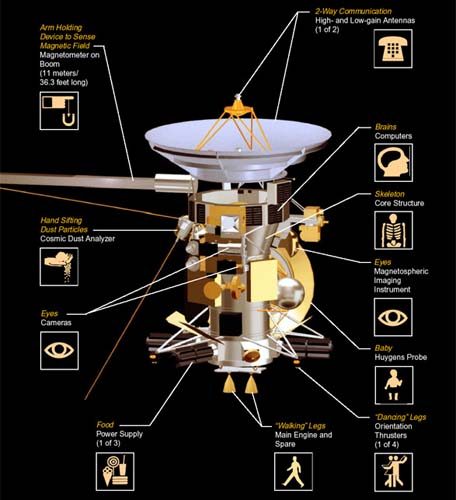 Washington, March 13: The Cassini spacecraft has relayed information that it had successfully swapped to a backup set of propulsion thrusters late on March 11.
 New York, March 13: A red 8GB iPod emblazoned with former U. S. President Bill Clinton’s signature has been sold at an online charity auction.
  Washington, Mar 13: The US in still not willing to support a demand for the restoration of sacked judges, despite a change of government in Washington and, seems eager not to criticise the Zardari Government for its crackdown on opposition activists. It also wants to appear neutral in the Zardari-Sharif imbroglio.
