London, December 16 : A probe by security experts has revealed that cyber criminals tend to work up a fortune by selling stolen Facebook profiles for an amount as low as 89p.
According to Trend Micro specialists, hackers break into social networking accounts to steal personal information of users to sell them off to criminal groups who then use the details to send "spam" messages to million others.
The wrong-doers tend to send an invitation to account holders to view videos or pictures of family and friends, which on being clicked allow access to the victims' computer, reports the Sun.
Washington, Dec 16 : Scientists at the California Institute of Technology, US, have observed one of the strongest solar flares of the past 30 years.
Solar flares are the most powerful explosions in the solar system. Packing a punch equal to a hundred million hydrogen bombs, they obliterate everything in their immediate vicinity.
Washington, Dec 16 : New calculations have shown that eating goose eggs may help polar bears weather climate change, as it would provide the animals with an alternative source of food.
Polar bears, Ursus maritimus, are listed as a threatened species under the United States' Endangered Species Act and are classified as "vulnerable with declining populations" under IUCN's Red List.
The new calculations show that changes in the timing of sea-ice breakup and of snow goose nesting near the western Hudson Bay could provide at least some polar bears with an alternative source of food.
Washington, Dec 16 : A new project, led by a University of Virginia (U. Va.) professor, is all set to survey more than 100,000 Milky Way stars, in an attempt to know more about the history of our galaxy.
The project, the Apache Point Observatory Galactic Evolution Experiment, or APOGEE, is one of four experiments of the new Sloan Digital Sky Survey III, using the astronomical facilities at Apache Point Observatory in New Mexico.
Washington, Dec 16 : NASA has outlined its top ten science, exploration and discovery stories of 2008, the year in which the agency celebrated its 50th birthday.
London, Dec 16 : A team of astronomers have reported that a new camera is giving them the sensitivity they need to spot habitable extrasolar planets, which are nearly as small as Earth.
According to a report in Nature News, the team observed a planet - WASP-10b, which is around three times the mass of Jupiter orbiting the star WASP-10.
The team determined that the star is about 300 light years from Earth, and measured precisely how much the star dimmed as the planet passed in front of it.
 London, December 16 : A probe by security experts has revealed that cyber criminals tend to work up a fortune by selling stolen Facebook profiles for an amount as low as 89p.
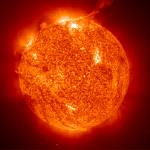 Washington, Dec 16 : Scientists at the California Institute of Technology, US, have observed one of the strongest solar flares of the past 30 years.
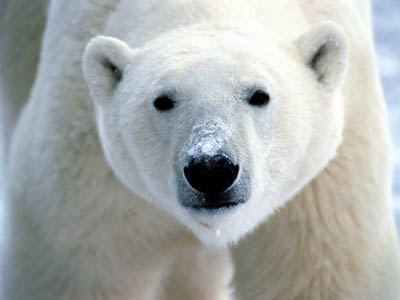 Washington, Dec 16 : New calculations have shown that eating goose eggs may help polar bears weather climate change, as it would provide the animals with an alternative source of food.
 Washington, Dec 16 : A new project, led by a University of Virginia (U. Va.) professor, is all set to survey more than 100,000 Milky Way stars, in an attempt to know more about the history of our galaxy.
 Washington, Dec 16 : NASA has outlined its top ten science, exploration and discovery stories of 2008, the year in which the agency celebrated its 50th birthday.
 London, Dec 16 : A team of astronomers have reported that a new camera is giving them the sensitivity they need to spot habitable extrasolar planets, which are nearly as small as Earth.
