EU wants fair investigation into Bangladesh's 1971 war crimes
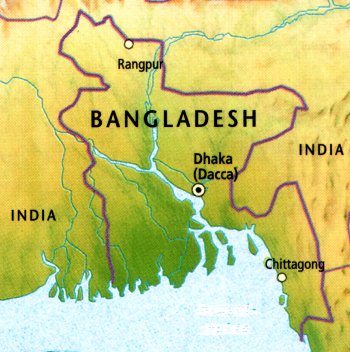 Dhaka - A visiting troika delegation of the European Union said Monday that the EU wants the prosecution of Bangladesh's 1971 war crimes to be conducted in a fair and transparent manner.
"We are saying in the European Union that every war crime should be investigated. At the same time it has to be done properly, carefully and in a transparent way so that every possible suspicion of abusing the situation of the winner or abusing the topic for some revenge can be excluded," Czech Deputy Minister of Foreign Affairs Helena Bambasova told reporters in Dhaka following a meeting with Bangladeshi Foreign Minister Dipu Moni.
Bambasova, leading the EU delegation to Bangladesh, said that the delegation discussed the issue of a trial of those accused of war crimes in Bangladesh's 1971 war of independence.
"It is an important but also a sensitive issue," she said, terming the issue as Bangladesh's internal affair.
Asked whether the EU has plans to provide support to Bangladesh to try the alleged war criminals in a transparent way, the Czech deputy minister said, "We are not supporting. It is your entire issue. You have to solve yours. I have just expressed the position of the EU."
Bangladesh's Awami League-led alliance government of Prime Minister Sheikh Hasina Wazed, in line with her 2008 election pledges, has initiated a process to try local collaborators of Pakistani forces who had committed crimes against humanity during the 1971 war.
Earlier, the government had said the war crimes trials would be prosecuted under Bangladesh's International Crimes Tribunals Act of 1973. It had also barred suspected war criminals from leaving the country.
In late January, parliament approved a resolution seeking the speedy prosecution of war criminals.
According to historians, some 3 million unarmed people were killed during Bangladesh's war of independence against Pakistani forces in 1971.
Around 200,000 women were raped and tens of thousands of homes were torched by Pakistani forces and their local collaborators.
An early initiative to prosecute war crimes was called off after the 1975 political changeover following the assassination of Sheikh Mujibur Rahman, the architect of Bangladesh's independence.
The Bangladesh Sector Commander Forum, a group of 1971 war veterans, revealed last year that 11,000 indicted war criminals were released from jails a few months after Sheikh Mujibur Rahman's assassination in August 1975.
The EU Troika arrived in Dhaka Sunday to take stock of Bangladesh's political, social and economic issues after the landmark December 2008 elections ending two years of rule of a military-backed government.
The troika chief said that the EU appreciated Bangladesh for holding the elections in a transparent way.
"Your government enjoys a great support winning of parliamentary elections and the way it was done was very democratic and transparent. The EU had many observers in this country," she said.
On alleged violation of human rights by the law enforcing agencies, especially extrajudicial killings, Helen said, "We have touched upon the extrajudicial killings. We have been reassured that there is the commitment of zero tolerance and all those cases have to be properly investigated in a very transparent way."(dpa)
TopNews Hindi
- Geojit ने Apollo Hospitals पर BUY कॉल दोहराया, Share Price Target Rs. 9,587
- ब्लूस्टोन ज्वेलरी एंड लाइफस्टाइल (BlueStone Jewellery) Share Price Target Rs 662: BOB Capital Market
- वैभव सूर्यवंशी के 10 वर्षीय भाई आशीर्वाद सूर्यवंशी की समस्तीपुर में आक्रामक पारी
- जिंदल स्टेनलेस (Jindal Stainless) Share Price Target Rs 821: प्रभुदास लीलाधर शेयर रिसर्च
- प्रभुदास लीलाधर की Cera Sanitaryware पर ‘BUY’ रेटिंग, Share Price Target Rs 7,429

