Exports must remain a pillar of the German economy, says Merkel
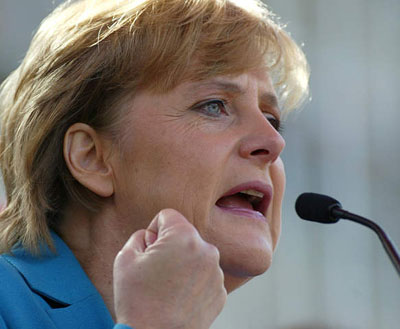 Berlin - German Chancellor Angela Merkel said Monday that exports would continue to play a leading role in driving growth in Europe's biggest economy.
Speaking at a convention in Berlin of Germany's influential industry federation (BDI), Merkel insisted that there was no alternative to German remaining a major export nation.
This included during periods such as the present when the country's foreign orders have been badly hit by an economic downturn.
As the world's leading exporter, Germany was considered by economists to be particularly vulnerable to the global recession and the consequent dramatic fall in world trade.
Merkel's speech comes in the wake of warnings from economists that the slump in global trade had meant that Germany would have to consider steps to boost domestic demand to help offset the contraction in foreign orders and reduce the nation's reliance on exports.
The German chancellor also insisted that the scale of the economic crisis meant it was necessary to press on with the reforms to global financial markets that the Group of
20 leading industrial and emerging economies agreed to March this year.
"We have to work further on the rules with a continuing effort," Merkel told the business delegates attending the convention.
The build-up to this year's convention has also been surrounded by a major debate in Germany about the need for government assistance to help companies battle through the economic crisis, which took hold last year.
But in his remarks opening the convention, BDI's Hans-Peter Keitel warned about exaggerated claims from companies for state aid to help shore up their business saying limits needed to be established for industry demands for state assistance.
"We should not try to make it is easy for us by turning to the government in the crisis," he said.
Keitel went on to express concern about the moves to throw a financial lifeline to European offshoot of the ailing US giant auto group General Motors Corp, Opel as "short term, interest driven, and risky."
The BDI chief said that small-to-medium sized companies could not understand why each Opel job can be rescued with 200,000 euros of state funds when they face increasing difficulties in arranging finance as a result of the global credit crunch.
But despite the continuing pressures facing German industry, Keitel said signs has emerged that the economic crisis was starting to plateau out.
This year's BDI convention also comes as the nation's political establishment gears up for a national election set down for September.
However, the BDI chief called on Germany's political leaders to press with "real reforms of the social system" as well as taking steps to reduce the tax burden in the country. (dpa)
TopNews Hindi
- Geojit ने Apollo Hospitals पर BUY कॉल दोहराया, Share Price Target Rs. 9,587
- ब्लूस्टोन ज्वेलरी एंड लाइफस्टाइल (BlueStone Jewellery) Share Price Target Rs 662: BOB Capital Market
- वैभव सूर्यवंशी के 10 वर्षीय भाई आशीर्वाद सूर्यवंशी की समस्तीपुर में आक्रामक पारी
- जिंदल स्टेनलेस (Jindal Stainless) Share Price Target Rs 821: प्रभुदास लीलाधर शेयर रिसर्च
- प्रभुदास लीलाधर की Cera Sanitaryware पर ‘BUY’ रेटिंग, Share Price Target Rs 7,429

