Prince Charles on warpath over Qatari-backed flats By Anna Tomforde
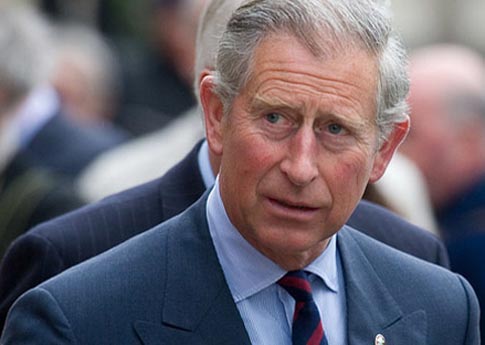 London - A private letter between royal friends over a Qatari-backed luxury housing project in London has reignited the long-standing style war between Britain's Prince Charles and the country's architectural elite.
"Abolish the monarchy," shouted a lone voice as Prince Charles wound up a lecture to mark the 175th anniversary of the Royal Institute of British Architects (RIBA) in London Tuesday evening.
It was a distinctly meek and solitary protest at the end of a polite speech in which the 60-year-old prince said he had no intention of rekindling a 1980s "style war" over the controversial luxury housing development in central London.
"I am sorry if I somehow left the faintest impression that I wished to kick-start some kind of style war between classicists and modernists," said Charles, adding that he believed in "organic sustainable architecture" that put the needs of people first.
But while his words may have been chosen diplomatically, few observers believe that Prince Charles has retreated from his position that the 1-billion-pound
(1.5-billion-dollar) luxury housing and shopping complex planned in the heart of the fashionable district of Chelsea is not to his liking.
Many were reminded of the prince's previous high-profile interventions in the field of architecture, health and education, and especially his 1984 remark condemning a planned extension to London's National Gallery as a "monstrous carbuncle on the face of a much-loved and elegant friend."
In a personal letter to Sheikh Hamad bin Jassim bin Jabor Al-Thani, the prime minister of Qatar, the British heir to the throne had earlier this month described the new steel and glass design by star architect Richard Rogers as "unsympathetic and unsuitable" for the area.
The prince's appeal to the Qatari leader to scrap the design in favour of a more traditionalist scheme enraged top architects, who accused the prince of "using his influence to the detriment of the democratic process to oust modern architecture in favour of his preferred style."
The reaction of the Qatar royal family, meanwhile, remains a closely-guarded secret, with some commentators insisting that the prince was rebuffed and others saying he received a sympathetic hearing.
Rogers, 75, the creator of world-famous projects such as the Centre Pompidou in Paris, the remodelling of Barcelona's bullring, Madrid's airport terminal, the European Court of Human Rights in Strasbourg, London's Lloyds building and the Millennium Dome, has kept a low-profile in the controversy.
The development in question is within view of Rogers' London home, an elegant Georgian mansion a stone's throw from the fashionable Kings Road.
It is placed on the site of former Chelsea Barracks, an ugly 1950s development sold by the Ministry of Defence to private property investors in May, 2006, for 959 million pounds.
The developers, Nick and Christian Candy, who bought the site with Qatari Diar, the development arm of the Qatari royal family, have since agreed to sell their stake to the Qataris.
Rogers' plan envisages the construction of 552 flats in 17 blocks, some more than nine storeys tall, as well as shops and a hotel.
The project is situated opposite Chelsea Hospital, a retirement home for armed forces veterans, built in the elegant style of 17th century English architect Christopher Wren.
Prince Charles believes that the Rogers' project sits unhappily with its neighbour, and should be replaced by a more moderate classical pastiche of Wren by one of his his favourite architects, Quinlan Terry.
"His view is really out of date, it belongs to another century and I don't see why we should build 'fairyland' when we could be doing something much better," said Will Alsop, one of the rebel modernist architects.
But Robert Adam, a more traditionalist architect, said it was within the prince's "constitutional duties" to speak out.
"The Prince of Wales ... is speaking for the man in the street ... who has no real power in the face of very powerful architects and bureaucracy," he said.(dpa)
TopNews Hindi
- ब्लूस्टोन ज्वेलरी एंड लाइफस्टाइल (BlueStone Jewellery) Share Price Target Rs 662: BOB Capital Market
- वैभव सूर्यवंशी के 10 वर्षीय भाई आशीर्वाद सूर्यवंशी की समस्तीपुर में आक्रामक पारी
- जिंदल स्टेनलेस (Jindal Stainless) Share Price Target Rs 821: प्रभुदास लीलाधर शेयर रिसर्च
- प्रभुदास लीलाधर की Cera Sanitaryware पर ‘BUY’ रेटिंग, Share Price Target Rs 7,429
- आज का मौसम 29 मई: 16 राज्यों में तूफानी बारिश का अलर्ट, दिल्ली में राहत की उम्मीद लेकिन मानसून अभी दूर

