Vietnam, China clash over UN Law of the Sea
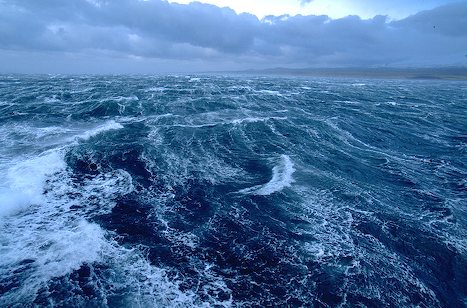 Hanoi - As the deadline for countries to submit their final claims to maritime territory under the UN Law of the Sea Treaty expired Wednesday, Vietnam, China and four other countries remained at odds over who owns the South China Sea.
The dispute has sparked diplomatic protests and contributed to a recent rise in tensions between Vietnam and China. It has led to confrontations between US and Chinese naval vessels, and may be behind Vietnam's decision in April to order six state-of-the-art diesel attack submarines from Russia, at a cost of 1.8 billion dollars.
And for many Vietnamese, China's claim to sovereignty over the entirety of what Vietnamese call the East Sea is a step too far.
"Vietnam is weaker (than China), but Vietnam has a long tradition of 'using weakness to defeat strength,'" said Do Tien Sam, director of Vietnam's Institute of Chinese Studies. "Vietnam does not provoke anyone, but if anyone provokes Vietnam, Vietnam will be ready for that."
The current flurry of diplomatic protests stems from a deadline imposed by treaty, which gave signatory nations until Wednesday to submit their claims to exclusive economic zones above their continental shelves. Such zones can extend up to 350 nautical miles (about 650 kilometres) from the shore.
Vietnam, Malaysia, the Philippines and Brunei all claim part or all of the Spratly and Paracel Islands and the South China Sea waters around them. The area is believed to contain substantial undersea oil reserves.
All four nations submitted their claims to UNCLOS, the UN body that administers the treaty, last week. Taiwan, which also claims the islands, cannot submit a claim because it is not a signatory state.
China quickly rejected Vietnam's and Malaysia's claims, which overlap the most with China's.
On Tuesday, Chinese Foreign Ministry spokesman Ma Zhaoxu said China has "indisputable sovereignty over the South China islands." He called Vietnam's submission to UNCLOS "illegal and invalid."
China submitted its own claims to UNCLOS, but a Vietnamese government source, speaking on condition of anonymity, told the German Press Agency dpa the Chinese document did not present its claims to the South China Sea. China claims the entirety of the sea as its own territorial waters, and does regards the Law of the Sea's terms as applicable.
China's South-East Asian neighbours have begun to resolve their more modest marine territorial claims between themselves, hoping to present a united front. Vietnam and Malaysia, which have no conflicting claims, presented a joint submission to UNCLOS.
Vietnam invited the Philippines to join that submission, but Philippine Ambassador Laura Del Rosario told dpa her government could not participate, in part because of overlaps between the Philippine and Malaysian claims.
Del Rosario said the efforts to present a common position of the Association of South-East Asian Nations (ASEAN) were frustrated by Beijing.
"No matter how much we try to work together, China still refuses to deal with us except on a bilateral basis," Del Rosario said. "If we say okay, you deal with us, four ASEAN claimants, China refuses."
Vietnam and China generally enjoy close relations, but the conflict over maritime resources is a persistent source of tension.
"Vietnam and China have agreed not to make the situation in the East Sea more complicated," said Bui Hong Phuc, Vietnam's former ambassador to China. "But because each country is strengthening its territorial claims, it causes conflict."
Sam, however, said it was highly unlikely the dispute would ever lead to armed clashes between Vietnam and China.
But Vietnamese and Western analysts said privately that Vietnam's acquisition of Russian submarines seems to be part of a strategy to counter the growing strength of the Chinese Navy.
No other country in the region comes close to matching China's naval power, but submarines represent an asymmetric threat that could deny the Chinese control over the area if they attempt to seize the islands by force.
The one naval power that can match the Chinese, the United States, maintains it has no position on the territorial dispute, but it does insist on the maintenance of the Law of the Sea's right to free passage for all ships outside of countries' 12-nautical mile territorial waters.
China may not agree. In January and March, US naval vessels were obstructed by Chinese ships in international waters south of the island of Hainan. US efforts to defend the right of free passage have been hampered by the fact that it is not a treaty signatory.
Protesting the Vietnamese and Malaysian submissions, China demanded that they be considered void until bilateral agreements have been worked out. That may take a long time. Disputes over the Spratlys and Paracels date back to at least the 1970s.
In the meantime, Vietnam is making sure it has options.
"China is strengthening its naval forces," Phuc said. "Why shouldn't Vietnam do that too?"(dpa)
TopNews Hindi
- ब्लूस्टोन ज्वेलरी एंड लाइफस्टाइल (BlueStone Jewellery) Share Price Target Rs 662: BOB Capital Market
- वैभव सूर्यवंशी के 10 वर्षीय भाई आशीर्वाद सूर्यवंशी की समस्तीपुर में आक्रामक पारी
- जिंदल स्टेनलेस (Jindal Stainless) Share Price Target Rs 821: प्रभुदास लीलाधर शेयर रिसर्च
- प्रभुदास लीलाधर की Cera Sanitaryware पर ‘BUY’ रेटिंग, Share Price Target Rs 7,429
- आज का मौसम 29 मई: 16 राज्यों में तूफानी बारिश का अलर्ट, दिल्ली में राहत की उम्मीद लेकिन मानसून अभी दूर

