Apple Cuts Supplier Demand for iPhone 18 Pro Components: Nikkei Asia Report
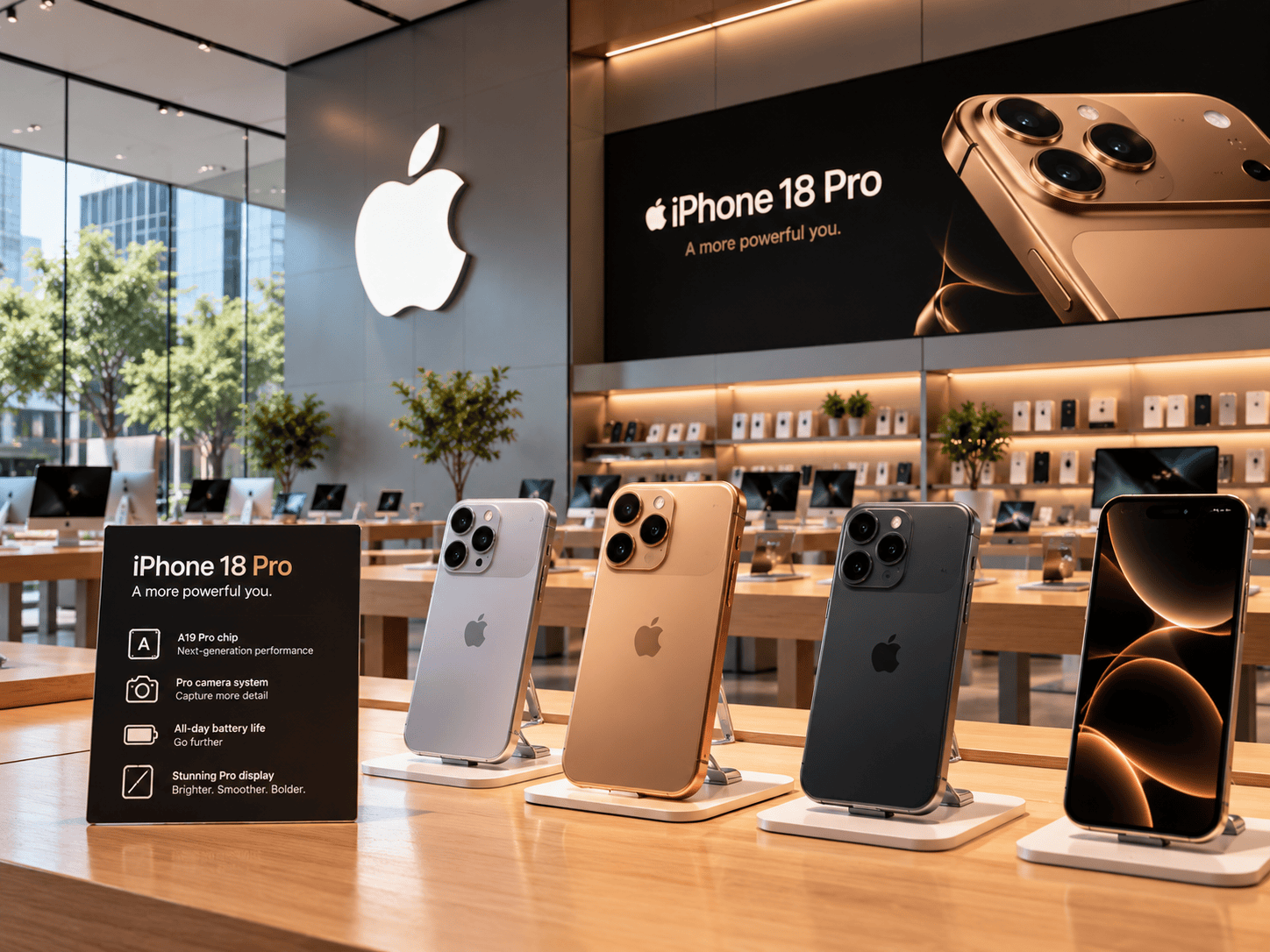
Apple’s premium iPhone strategy is showing early signs of strain. Suppliers say the company has cut component orders for the iPhone 18 Pro and Pro Max by 15% to 20% for October after price increases driven by surging memory-chip costs appear to have dampened demand, according to a Nikkei Asia report. The development lands at a delicate moment for Apple, whose shares had been trading near record highs and whose product lineup is becoming progressively more expensive.
Apple Trims Premium iPhone Orders
Apple has instructed several suppliers to reduce production of components destined for the iPhone 18 Pro and iPhone 18 Pro Max, Nikkei Asia reported, citing multiple people familiar with the matter. The reductions affect October orders, which are now at least 15% below the volumes Apple initially requested.
The cutbacks are concentrated in Apple’s highest-priced smartphones—the very models that typically anchor the company’s hardware margins. According to one executive-level source, the reduction ranges from 15% to 20% for both premium models in October alone.
“We don’t know how things would develop from here,” the source told Nikkei Asia, underscoring the uncertainty now surrounding Apple’s near-term production planning.
The impact on suppliers will vary. Some manufacturers may see lower output this month depending on their lead times and inventory positions. Nikkei reported that it remains unclear whether Apple will impose additional order reductions from November, leaving the supply chain in a wait-and-see posture.
Reuters said it could not immediately verify the report, and Apple did not immediately respond to a request for comment.
Higher Prices Meet Demand Elasticity
The immediate cause appears to be price. The iPhone 18 Pro starts at $1,199, while the iPhone 18 Pro Max begins at $1,299. Both carry a $100 premium over the iPhone 17 Pro models they replace, and both went on sale on September 18.
That increase was not merely a pricing experiment. Rising memory-chip costs have pressured Apple’s bill of materials, forcing the company to pass more of the expense to consumers. The question now is whether buyers at the top end of the smartphone market are willing to absorb it.
UBS analysts suggest they may not be. The bank found that average waiting times for iPhone 18 Pro deliveries had fallen across more than 30 markets, a signal that supply is catching up with demand—or that demand is falling short of Apple’s expectations.
In a note cited by Nikkei, UBS described the trend as “an increasing concern,” particularly because the higher prices have “raised the risk of demand elasticity.” In plain terms: when a flagship product becomes materially more expensive, even loyal premium customers may delay an upgrade, choose a lower-tier model, or hold on to their existing device for another cycle.
Market Reaction Near Record Highs
Investors reacted quickly. Apple shares fell about 1.6% in early premarket trading on Friday, with Barron’s estimating the decline at roughly 2% before the market opened.
The sell-off was notable because of where the stock had been trading. Apple closed Thursday just below its record closing high, set on September 25. That positioning meant the market had little tolerance for fresh evidence that its most profitable product line might be losing momentum.
For a company of Apple’s scale, a modest order cut does not necessarily translate into an earnings crisis. But the signal matters. iPhone revenue remains central to Apple’s financial engine, and the Pro models carry disproportionate importance because of their higher average selling prices and richer margins.
A Staggered Launch Complicates the Picture
Part of the demand softness may be structural rather than purely price-driven. Apple has changed its launch cadence: the standard iPhone 18 and the next iPhone Air are expected to arrive in spring 2027, rather than alongside the Pro models.
That staggered schedule removes a traditional volume driver from the autumn quarter. As one supply chain manager told Nikkei Asia, the standard iPhone 18—which could provide a meaningful boost to overall shipments—will not require components until toward the end of the year.
In other words, Apple’s October production cuts may partly reflect a thinner near-term product calendar rather than a wholesale collapse in iPhone demand. Still, the timing is unfortunate: the company is asking suppliers to scale back its most expensive phones precisely when the lower-priced models that typically broaden the customer base are absent from the market.
There is also a revenue nuance. Because the new Pro models cost at least 10% more than the devices they replace, lower unit production may not immediately translate into proportionally lower revenue. Apple could still post resilient iPhone revenue even if shipment volumes weaken—a distinction investors will need to watch closely when the company next reports results.
Memory Costs Reshape the Hardware Market
The pricing pressure extends well beyond Apple. Artificial-intelligence companies are absorbing vast quantities of memory chips for data-center buildouts, tightening supply and lifting costs across the technology ecosystem.
Apple has already acknowledged the squeeze. In June, it raised prices for iPads and MacBooks, saying it could no longer shield customers from higher memory and storage costs. The iPhone price increases follow the same logic.
The broader backdrop is unforgiving. Research firm IDC expects global smartphone shipments to fall 16.7% in 2026, a steep decline that would intensify competition for a shrinking pool of upgrade-ready consumers.
That environment creates a strategic dilemma for premium smartphone makers. Raising prices protects margins in the short term, but it risks suppressing replacement demand in a market where consumers are already holding devices longer. Apple’s scale and brand loyalty give it more pricing power than most rivals, but even that power has limits.
The Foldable Question: iPhone Duo at $1,999
The report also casts doubt on Apple’s next major hardware bet: the iPhone Duo, the company’s first foldable smartphone. The device is priced at $1,999 and is scheduled to go on sale on October 23.
For Apple, the foldable represents both an opportunity and a risk. It could open a new premium category and defend the company against rivals that have already commercialized foldable designs. But at nearly twice the price of a standard flagship iPhone, it enters the market with an exceptionally narrow addressable audience.
“It’s just too expensive for a smartphone,” one person with direct knowledge of the situation told Nikkei Asia.
That criticism captures the central tension in Apple’s current product strategy. The company is leaning further into high-price, high-margin devices at a time when memory costs are rising, global smartphone demand is weakening, and consumers are increasingly selective about upgrades.
TopNews Hindi
- FSSAI की शराब कार्रवाई: मैकडॉवेल्स नंबर 1, Old Monk, Antiquity Blue, Royal Challenge पर बैन
- Karuppu, Parasakthi, Thaai Kizhavi, Blast and Kara Among Best Tamil Movies for 2026
- Anupama, YRKKH, Vasudha, Tum Se Tum Tak: सबसे ज़्यादा देखे जाने वाले धारावाहिक
- 2026 FIFA World Cup Current Rankings and Betting Odds for Sports Betting Fans
- JEE Main 2026: Exam Dates, Eligibility, Syllabus जेईई मेन 2026 परीक्षा की तारीखें, योग्यता, सिलेबस

