Olympic Esports Games in Jeopardy After IOC Decision; No Clarity on Event
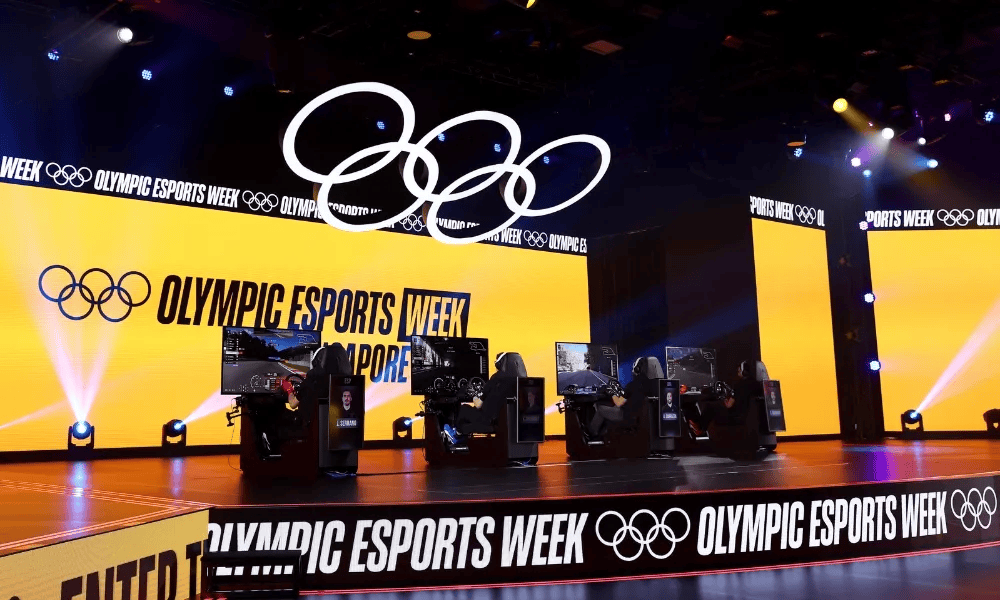
The Olympic Esports Games—once envisioned as a landmark fusion of digital competition and Olympic tradition—have entered a prolonged period of uncertainty following a reported decision by the International Olympic Committee to suspend the activities of its Esports Commission. After a series of delays, failed partnerships, and leadership transitions, the initiative now appears directionless. The shift in strategic priorities under new IOC President Kirsty Coventry, compared to her predecessor Thomas Bach, underscores a broader recalibration within the Olympic movement—one that may sideline esports despite its explosive global growth.
Olympic Esports Vision Faces Strategic Stall
The ambition to integrate esports into the Olympic ecosystem has encountered yet another disruption, raising fundamental questions about the viability of the Olympic Esports Games. According to reporting from Kyodo News, the IOC has instructed its Esports Commission to place its activities “on hold,” effectively freezing progress on what was once considered a transformative initiative.
This development represents a critical inflection point for a project that had already endured multiple delays, shifting timelines, and a high-profile partnership collapse. While the IOC has yet to formally comment, the reported suspension signals internal hesitation—if not outright reconsideration—regarding esports’ role within the Olympic framework.
From Momentum to Uncertainty: A Timeline of Setbacks
The trajectory of the Olympic Esports Games has been anything but linear. The concept gained early momentum following the success of Olympic Esports Week in Singapore in 2023—an event that demonstrated both organizational feasibility and strong audience engagement.
Initial plans projected a 2025 debut, supported by a strategic agreement between the IOC and Saudi Arabia. However, logistical and contractual complexities forced a postponement to 2027. The situation deteriorated further when the partnership collapsed entirely in late October of the following year, leading to the abrupt cancellation of the event.
This sequence of setbacks has eroded confidence in the initiative. Each delay not only increased operational uncertainty but also diluted the sense of urgency and innovation that originally fueled the project.
Leadership Transition Alters Strategic Priorities
A critical variable in the evolving narrative is the leadership transition within the IOC. Under Thomas Bach, the organization demonstrated a willingness to experiment with new formats and expand into emerging domains such as esports. Bach’s tenure was marked by a broader vision aimed at modernizing the Olympic brand and attracting younger audiences.
That vision now appears to be under review. Since assuming office in June, Kirsty Coventry has signaled a more conservative approach, prioritizing the preservation and enhancement of traditional sports.
This strategic pivot carries significant implications. By reallocating focus toward established disciplines, the IOC may be implicitly deprioritizing experimental ventures like esports—particularly those that require substantial investment, new governance structures, and alignment with a rapidly evolving digital ecosystem.
Esports: A Growing Industry at Odds with Olympic Structure
The uncertainty surrounding the Olympic Esports Games stands in stark contrast to the broader trajectory of the esports industry. Globally, esports continues to expand its footprint, attracting audiences across multiple demographics—from teenagers to professionals in their 30s and 40s.
This diversification of viewership challenges outdated assumptions that esports is a niche or youth-exclusive phenomenon. In reality, it represents a mature, monetizable, and culturally influential segment of the global entertainment economy.
However, integrating esports into the Olympic model presents structural challenges. Unlike traditional sports, esports is decentralized, publisher-driven, and subject to intellectual property constraints. These factors complicate governance, standardization, and long-term planning—core principles of the Olympic movement.
Institutional Hesitation and Strategic Risk
The reported suspension of the Esports Commission’s activities suggests more than a temporary pause—it reflects deeper institutional hesitation. The IOC faces a strategic dilemma: whether to adapt to a rapidly changing sports landscape or reinforce its legacy model.
Delaying or abandoning the Olympic Esports Games carries reputational and strategic risks. The initiative was positioned as a bridge to younger audiences, a demographic that traditional Olympic formats increasingly struggle to engage. Failure to deliver could reinforce perceptions of the IOC as resistant to innovation.
At the same time, proceeding without a clear framework or stable partnerships could expose the organization to operational and financial risks. The collapse of the Saudi agreement underscores the fragility of such ventures when alignment between stakeholders is not fully secured.
What Lies Ahead for the Olympic Esports Games?
At present, the Olympic Esports Games remain in a state of strategic limbo. The absence of official communication from the IOC only amplifies uncertainty, leaving stakeholders—from publishers to athletes and sponsors—without clear direction.
Key variables that will shape the future include:
The IOC’s long-term strategic vision under its current leadership
The feasibility of securing new partnerships or hosting agreements
The ability to reconcile esports’ decentralized nature with Olympic governance
Market demand and commercial viability of an Olympic-branded esports event
Without decisive action, the initiative risks fading into irrelevance, overshadowed by independently organized esports tournaments that continue to grow in scale and sophistication.
TopNews Hindi
- एचडीएफसी एएमसी (HDFC AMC) Share पर BUY की सलाह; लक्ष्य मूल्य Rs 3,006: बीओबी कैपिटल मार्केट्स
- भारतीय क्रिकेट टीम बनाम इंग्लैंड क्रिकेट टीम के आंकड़े एवं टाइमलाइन
- FSSAI की शराब कार्रवाई: मैकडॉवेल्स नंबर 1, Old Monk, Antiquity Blue, Royal Challenge पर बैन
- Karuppu, Parasakthi, Thaai Kizhavi, Blast and Kara Among Best Tamil Movies for 2026
- Anupama, YRKKH, Vasudha, Tum Se Tum Tak: सबसे ज़्यादा देखे जाने वाले धारावाहिक

