Hubble captures odd star motion
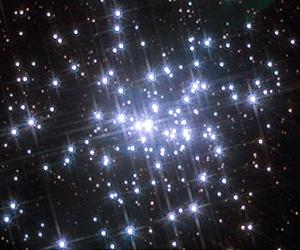 The Hubble Space Telescope managed by the astronomers is now all set to measure the movement of stars in a stellar cluster.
These clusters constitute most of the stars in the solar system. And in the nebula, NGC 3603, particularly this stellar cluster is one of the largest and densest in the Milky Way.
The scientists have informed that the stars found in this cluster are not moving in the way they were expected to. The evolution and dispersion cycle of the stellar orangeries is yet to be found out.
Boyke Rochau led the research. He is the continuing his research in Max Planck Institute for Astronomy in Heidelberg. He has explained the details of this research and has said that stars contained in the clusters are in between 2 to 9 times the mass of our sun.
He has said that he and his team are looking for tracking their motion to observe how these important objects dynamically evolve and how long these clusters survive.
The researchers are expected to find out some new clue on this soon.
TopNews Hindi
- FSSAI की शराब कार्रवाई: मैकडॉवेल्स नंबर 1, Old Monk, Antiquity Blue, Royal Challenge पर बैन
- Karuppu, Parasakthi, Thaai Kizhavi, Blast and Kara Among Best Tamil Movies for 2026
- Anupama, YRKKH, Vasudha, Tum Se Tum Tak: सबसे ज़्यादा देखे जाने वाले धारावाहिक
- 2026 FIFA World Cup Current Rankings and Betting Odds for Sports Betting Fans
- JEE Main 2026: Exam Dates, Eligibility, Syllabus जेईई मेन 2026 परीक्षा की तारीखें, योग्यता, सिलेबस

