India emerges as a new player in Stem cell research
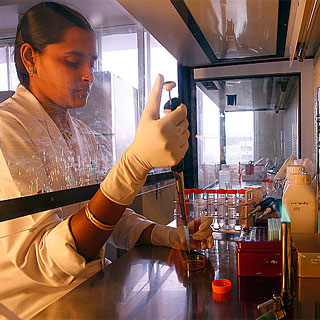 India is emerging as the new leading destination for Stem cell research as both the government and the private sector takes part in the initiatives in the industry.
Stem cell research is seen as the new medial technology around the world. The technology is believed to have the potential to change the ways of treatment. These cells are found in certain parts of the body like umbilical cord, bone marrow, embryo and even teeth.
These cells can become like any other cell in the body. The technology in this sector could grow back body parts.
Other countries are increasing focusing on the field. South Korea has a programme since last eight years and the U. S has recently increased funding for such research programmes. India is now entering the research field in a significant way. The establishments in the country are pursuing programmes aggressively.
The technology is global and no single country is believed to be having a clear advantage. India has a chance to learn from the experiences of the United States and South Korea and implement its programmes with existing knowledge.
The centre has allocated more than Rs. 300 crore over the last five years for basic and applied research programmes in stem cell technology. The research programmes focus on treating diseases that affect millions of Indians.
The government programmes are based on the fundamentals of how stem cells work and involve clinical trails. The National Centre for Biological Sciences (NCBS) in Bangalore is leading the government's efforts in the field.
Dean InStem NCBS, S. Ramaswamy said "We are developing model systems, for example planaria or hydra to understand how stem cells work." The model systems leads to principles that can be applied to more complex systems.
Various other institutes like AIIMS, L. V. Prasad Eye Institute, Center for Stem Cell Research at CMC Vellore and National Centre for Cell Sciences (NCCS) at Pune University are also involved in such initiatives. These institutes run programmes which mainly focus on applied part of the research.
These institutes aim at identifying sources of stem cells and form procedure for treatment. The private sector hence plays an important role. Dr. Satish Patki, along with Dr. Ramesh Bhonde of NCCS, have identified the female genital tract as a rich source of stem cells. Dr. Patki is now trying to see whether these stem cells can be used to generate blood flow to the foetus.
The stem cells technology also requires the cells to be stored. facilities has been created to store stem cells from umbilical cord by the companies like Reliance Life Sciences and Lifecell.
There are concerns about ethical issues and the side-effect of treatment through stem cells. It was reported that some people sold "stem cell" injections for Rs. 80,000. This is a new field in the country and hence the authorities only have guidelines but not a regulatory framework yet.
TopNews Hindi
- भारतीय क्रिकेट टीम बनाम इंग्लैंड क्रिकेट टीम के आंकड़े एवं टाइमलाइन
- FSSAI की शराब कार्रवाई: मैकडॉवेल्स नंबर 1, Old Monk, Antiquity Blue, Royal Challenge पर बैन
- Karuppu, Parasakthi, Thaai Kizhavi, Blast and Kara Among Best Tamil Movies for 2026
- Anupama, YRKKH, Vasudha, Tum Se Tum Tak: सबसे ज़्यादा देखे जाने वाले धारावाहिक
- 2026 FIFA World Cup Current Rankings and Betting Odds for Sports Betting Fans

