No deal reached in Honduras talks
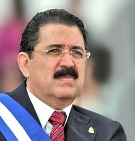 San Jose, Costa Rica - Ousted and exiled Honduran President Manuel Zelaya said he would begin to travel back to his country on Thursday after rejecting a proposal to end the Central American nation's political standoff.
Renewed mediation talks failed Wednesday to reach a deal after Zelaya rejected a plan put forward by Costa Rican President and mediator Oscar Arias. A previous effort by Zelaya to return to his country resulted in a standoff.
Arias had suggested returning Zelaya to power under a reconciliation government, but moving forward planned presidential elections to October. Zelaya would not have been eligible to run for reelection.
Zelaya's delegation rejected the proposal and declared the talks failed. The delegates called on Arias, the presidents of Central America, the Organization of American States and the UN Security Council to call special sessions.
The on-again off-again talks had resumed Wednesday after the de- facto government of Roberto Micheletti had a change of heart and rejoined the discussions.
Micheletti's delegation had also refused to sign a document put forward by Arias, but said they would bring it to Honduras for consideration by various state institutions.
Arias, who won the Nobel Peace Prize for mediating Central American conflicts in the 1980s, said the parties had eight days to consider the proposal.
"I will never give up hope that one day a dialogue between the Hondurans will be possible," he said.
At issue is the ouster of Zelaya on June 28 by the Honduran Supreme Court, military and Congress, which charged he had been plotting to hold a national referendum that would have supported his bid for more terms in office. Zelaya was awakened in the middle of the night and forced to flee the country while still wearing his pajamas.
The Organization of American States (OAS) has suspended Honduras' membership until Zelaya, the democratically elected leader, is restored.
The crisis has stirred diplomatic havoc, with disputes over representation in foreign capitals and in Tegucigalpa.
On Tuesday, Micheletti's regime ordered Venezuelan diplomats to leave the country by Friday. But the Venezuelan embassy in Tegucigalpa said Wednesday it refused to leave, and Venezuela's representatives to the OAS in Washington emphasized the country's intention to keep its diplomats in place in Honduras.
Micheletti's regime charges that Venezuelan diplomats have been organizing resistance from within the country that aims to restore Zelaya to power.
Supporters of the de-facto regime turned out in the thousands on Wednesday to demonstrate their opposition to "foreign intervention" in Honduras' affairs. (dpa)
TopNews Hindi
- आज का मौसम 29 मई: 16 राज्यों में तूफानी बारिश का अलर्ट, दिल्ली में राहत की उम्मीद लेकिन मानसून अभी दूर
- सोने और चांदी की कीमतों में मामूली गिरावट (Gold Price Declines Today), 22Karat सोना 1,56,600 रुपये प्रति 10 ग्राम
- वैभव सूर्यवंशी (Vaibhav Sooryavanshi) की IPL 2026 में राजस्थान रॉयल्स में रिकॉर्ड तोड़ बल्लेबाज़ी
- कल का मौसम: दिल्ली, हरियाणा, राजस्थान, पंजाब और उत्तर प्रदेश में अत्यधिक गर्म मौसम
- आज का मौसम: दिल्ली में भीषण गर्मी का प्रकोप, 45°C के पार पहुंचा पारा

