Protein ‘Sestrin’ Hinders Ageing In Fruit Flies
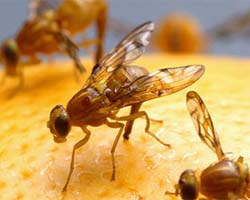 US researchers have discovered a protein named 'Sestrin', which serves as a natural inhibitor of ageing and age-related health problems in fruit flies.
Scientists at the University of California, San Diego School of Medicine, also pointed that the protein, whose arrangement as well as biochemical function are preserved between flies and human beings, is required for regulation of a signaling path, which is the central regulator of ageing and metabolic process.
Michael Karin, Distinguished Professor of Pharmacology in UCSD''s Laboratory of Gene Regulation and Signal Transduction and lead author of the study, carried out the research.
Sestrins are highly conserved small proteins that are developed in high amounts when cells go through tension.
Sestrin function, however, remained mystifying until the Karin group discovered that these proteins work as activators of AMP-dependent protein kinase (AMPK), and substances of the Target of Rapamycin (TOR).
AMPK and TOR are two protein kinases, which serve as main constituents of a signaling path shown to be the central controller of aging and metabolic process in a variety of model organisms, including the worm Caenorhabditis elegans, the fruit fly Drosophila melanogaster and mammals.
AMPK is actuated in reaction to caloric restriction, a condition that slows down aging, while TOR is triggered in response to over-nutrition, a state, which speeds up aging.
Activation of AMPK hinders TOR, and medicines that activate AMPK or inhibit TOR can delay aging in several different model organisms including mammals.
The research has been released in the March 5 issue of the journal Science. (With Input from Agencies)
TopNews Hindi
- आज का मौसम 29 मई: 16 राज्यों में तूफानी बारिश का अलर्ट, दिल्ली में राहत की उम्मीद लेकिन मानसून अभी दूर
- सोने और चांदी की कीमतों में मामूली गिरावट (Gold Price Declines Today), 22Karat सोना 1,56,600 रुपये प्रति 10 ग्राम
- वैभव सूर्यवंशी (Vaibhav Sooryavanshi) की IPL 2026 में राजस्थान रॉयल्स में रिकॉर्ड तोड़ बल्लेबाज़ी
- कल का मौसम: दिल्ली, हरियाणा, राजस्थान, पंजाब और उत्तर प्रदेश में अत्यधिक गर्म मौसम
- आज का मौसम: दिल्ली में भीषण गर्मी का प्रकोप, 45°C के पार पहुंचा पारा

