Asia
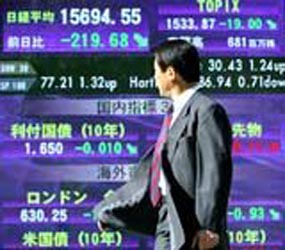 Tokyo - Asian stocks bounced up Thursday as investors were cheered by news from Japan, where the government prepared to unveil a 154-billion-dollar economic stimulus package and its machinery orders unexpectedly rose.
 Manila - The World Health Organization (WHO) on Monday urged Asian countries to invest in building disaster-resistant hospitals and health facilities, which are critical lifelines during calamities and other emergencies.
 Manila - Economic growth in developing Asia was expected to slow to its lowest rate in more than a decade due to the global economic crisis, the Asian Development Bank (ADB) said Tuesday.
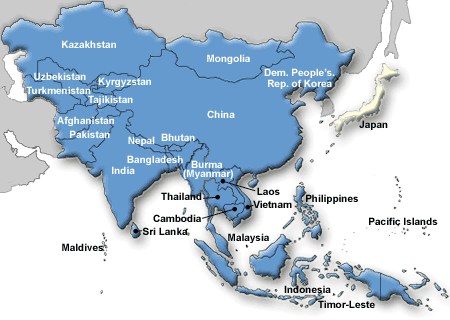 Bangkok - Six months ago, when the financial crisis started in US and European markets, there was still hope that South-East and East Asia would prove immune to the latest hiccup in capitalism.
 Manila - The World Health Organization (WHO) on Monday urged governments in Asia and the Pacific to boost their national health systems, which are vital in the fight against tuberculosis (TB), especially drug-resistant cases.
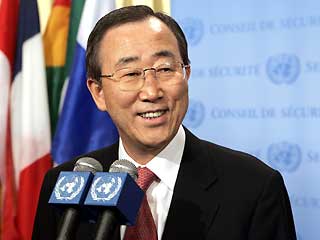 New York - The first nuclear weapon free-zone in the northern hemisphere will enter into force Saturday, which calls on the five Central Asian states to forswear nuclear weapons and abandon all nuclear activities.
TopNews Hindi
- ब्लूस्टोन ज्वेलरी एंड लाइफस्टाइल (BlueStone Jewellery) Share Price Target Rs 662: BOB Capital Market
- वैभव सूर्यवंशी के 10 वर्षीय भाई आशीर्वाद सूर्यवंशी की समस्तीपुर में आक्रामक पारी
- जिंदल स्टेनलेस (Jindal Stainless) Share Price Target Rs 821: प्रभुदास लीलाधर शेयर रिसर्च
- प्रभुदास लीलाधर की Cera Sanitaryware पर ‘BUY’ रेटिंग, Share Price Target Rs 7,429
- आज का मौसम 29 मई: 16 राज्यों में तूफानी बारिश का अलर्ट, दिल्ली में राहत की उम्मीद लेकिन मानसून अभी दूर

