South Korean business schools go global
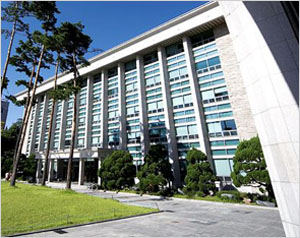 Seoul - Growing global demand for corporate managers has prompted South Korean universities to reshape their master's of business administration (MBA) programmes under a globalized strategy.
Several of South Korea's 13 universities that offer MBA programmes have forged alliances with other Asian business schools in Singapore, Hong Kong and China while they are also accredited by US or European business schools.
Seoul's Sogang University runs a dual MBA degree programme, in which students attend business classes in Illinois or Minnesota after attending the first year at Sogang.
Business major Park Hyung Chull enrolled in Sogang's MBA course after he came back from the United States in a riches-to-rags situation. His internet company made him a millionaire in the late 1990s, but when the dot. com bubble burst, he lost everything.
Back in South Korea, he took a job in the equipment rental business by day and enrolled in a night MBA course at Sogang University. Park now shares the lessons he learned in the corporate world with his classmates.
"I've learned that too early is too bad for starting a business," he said. "When I launched my price-comparing website, the market was not yet ready."
In Park's MBA courses, his classmates also share their business experiences. A director at a consulting company relates his strategy for matching employee salaries with performance. A manager with a transportation company shares his negotiation strategies for getting the best prices from prospective vendors. A manager at a a coffee company introduces his company's recent launch of a "green coffee marketing campaign."
"I am studying for my MBA in Korea at a much lower tuition than at the US business school," Park said. "Also, I find myself to be a part of the Korean corporate network [as I mix with my classmates] here."
Park is one of an increasing number of students who chose to enroll in MBA courses in South Korea. Their main advantages are the relatively low tuition, corporate networking opportunities and the schools' global networks.
"We are planning to send our students to Germany or France, so that we can send out half of our students to study abroad for a dual degree," said Lim Chae Un, a professor who heads the Sogang MBA programme.
To level the curriculum field with leading foreign business schools, South Korean universities have been accredited by the US-based Association to Advance Collegiate Schools of Business or the Brussels-based European Foundation for Management Development.
Their new mission matches corporate demand for global talent to manage corporate outposts. South Korean business groups like LG Electronics Inc, Samsung Electronics Co and Hyundai Motor Co have been stretched to staff their corporate offices worldwide.
The half a dozen top universities in South Korea that have reshaped their MBA programmes under a globalization campaign are latecomers compared with their US and European counterparts, but they said they plan to overcome this disadvantage by forming an intra-Asian network.
In the meantime, despite the slowing of the world economy, the demand for Korean MBA graduates by Korean companies continues to rise.
"When economies slow down, corporate demand for managers with a globalized outlook increases," said Lee Sang Ho, a professor of human resources at Seoul's Soongsil University. "Samsung and LG are trying to figure out how to fill their outposts with Korean managers with a globalized outlook."
Foreign students - including those from China, the US, Vietnam, Taiwan and Mongolia - also are attending South Korean MBA classes.
The MBA courses are usually customized into three categories: day MBAs for those who seek to forge a new career, night MBAs for those who are working day jobs and attend night classes, and executive MBAs for those who are already executives but desire an MBA degree.
The South Korean government and business have partnered to finance the new university mission to globalize. The government has set aside at least 150 million dollars a year to support university MBA programmes.
"If MBA schools in South Korea can serve as a major market for second-career job seekers, Korean MBA schools will be able to become a group of top-tier business schools to almost stand on the same par with Western business schools within the next five years," said Chang Ha Seong, a business professor at Korea University in Seoul. (dpa)
TopNews Hindi
- FSSAI की शराब कार्रवाई: मैकडॉवेल्स नंबर 1, Old Monk, Antiquity Blue, Royal Challenge पर बैन
- Karuppu, Parasakthi, Thaai Kizhavi, Blast and Kara Among Best Tamil Movies for 2026
- Anupama, YRKKH, Vasudha, Tum Se Tum Tak: सबसे ज़्यादा देखे जाने वाले धारावाहिक
- 2026 FIFA World Cup Current Rankings and Betting Odds for Sports Betting Fans
- JEE Main 2026: Exam Dates, Eligibility, Syllabus जेईई मेन 2026 परीक्षा की तारीखें, योग्यता, सिलेबस

