Tone sharpens as German coalition partners haggle over taxes
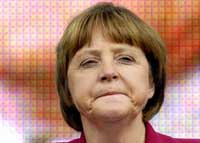 Berlin - The tone sharpened as Chancellor Angela Merkel's Christian Democrats launched into the second week of coalition talks with the Free Democrats (FDP) on Monday, attempting to balance empty state coffers with tax cut pledges.
Both sides accused the other of refusing to budge from their positions on tax policy, ahead of a meeting between the parties' finance experts.
Nevertheless the head of the committee, Thomas de Maiziere of the CDU, said he hoped they could reach agreement by Wednesday, when the party leaders next review progress.
"The FDP is sticking to its tax policy goals, said Hermann Otto Solms, touted as possible FDP finance minister, at the start of the day.
Solms blamed the previous government for deficits, which meant more time was needed to realize the FDP's targeted relief totalling 35 billion euros (32 billion dollars).
Before last month's general election, both CDU and FDP had stressed that tax relief was key to stimulating growth and pulling the economy out of its worst post-war slump.
"There must be notable tax relief, otherwise we can't get the economy going," said the FDP's deputy leader Rainer Bruederle.
However, state funding shortfalls estimated at 29-34 billion euros over the next four years have narrowed the options available for the new coalition partners to cut taxes and balance the budget.
The free market FDP has insisted that tax cuts must not be funded by debts. Both Solms and the FDP's budget expert Otto Fricke challenged the CDU to suggest ways in which public expenditure could be cut.
The CDU's general secretary Ronald Pofalla said economic realities meant that it might only be possible to fund tax cuts through new government borrowing. The CDU has more modest targets of relieving taxpayers by 15 billion euros, in two stages.
The German economy is expected to shrink by 5 per cent in 2009, and "the next years will also be crisis years," Pofalla said. Meanwhile industry associations warned against missing the opportunity for fundamental reforms.
"If we want to sustainably reform the country, now is the time to do so," the President of the German Industry Association (BDI), Hans- Peter Keitel, told German daily Bild.
The outcome of the coalition talks, a cornerstone of German politics, is a binding document laying out government policy for the next four years.
The bulk of differences between the parties are expected to be settled in the coming days. dpa
TopNews Hindi
- आज का मौसम 29 मई: 16 राज्यों में तूफानी बारिश का अलर्ट, दिल्ली में राहत की उम्मीद लेकिन मानसून अभी दूर
- सोने और चांदी की कीमतों में मामूली गिरावट (Gold Price Declines Today), 22Karat सोना 1,56,600 रुपये प्रति 10 ग्राम
- वैभव सूर्यवंशी (Vaibhav Sooryavanshi) की IPL 2026 में राजस्थान रॉयल्स में रिकॉर्ड तोड़ बल्लेबाज़ी
- कल का मौसम: दिल्ली, हरियाणा, राजस्थान, पंजाब और उत्तर प्रदेश में अत्यधिक गर्म मौसम
- आज का मौसम: दिल्ली में भीषण गर्मी का प्रकोप, 45°C के पार पहुंचा पारा

