Bernanke, Paulson push regulation, but must allow banks to fail
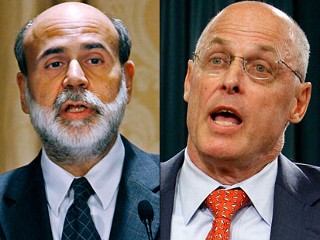 Washington - The United States' top economic officials on Thursday called for broader government regulatory powers to prevent the kind of "turmoil" that has plagued financial markets in recent months, but warned that investment banks must be allowed to fail in order to maintain market discipline.
Federal Reserve Chairman Ben Bernanke pressed Congress to require "consolidated supervision" of financial institutions, allowing an unspecified regulator to set standards for capital and liquidity holdings that lie at the heart of the current financial crisis.
Oversight of the US' major investment banks is currently operated by the Securities and Exchange Commission, but on a voluntary basis. Bernanke said oversight should be mandatory, but did not say which regulatory agency should take charge.
"At the same time, reforms in the oversight of these firms must ... take care neither to unduly inhibit innovation nor to induce a migration of risk-taking activities to less-regulated or offshore institutions," Bernanke said in testimony before the Financial Services Committee of the House of Representatives.
Treasury Secretary Henry Paulson, appearing before the same committee, said that current market turmoil had "placed in stark relief the outdated nature of our financial regulatory system."
Investment banks have reported nearly 500 billion dollars in writedowns of mortgage-related assets since August, after a sudden drop in housing prices prompted a record number of homeowners to default on mortgages they could no longer afford.
The Fed launched a series of unprecedented measures to ensure the stability of the financial system, expanding borrowing and even bankrolling the sale of Bear Stearns to rival JP Morgan Chase as the fifth largest US investment bank was threatened with collapse.
But both Bernanke and Paulson warned that new regulatory powers - be it for the Fed or another institution - could not threaten market discipline by making investors believe undue risks would be forgiven by the government in the future.
"I know from first hand experience that normal or even presumed access to a government backstop has the potential to change behaviour within financial institutions and with creditors," said Paulson, a former chief executive of Goldman Sachs.
Much of the current financial turmoil arose because investment banks' assets, or value, far outstipped their equity, or cash in hand, making them more vulnerable to the sudden plunging value of mortgage-backed securities and threatening some with complete collapse.
"For market discipline to effectively constrain risk, financial institutions must be allowed to fail," Paulson said. (dpa)
TopNews Hindi
- FSSAI की शराब कार्रवाई: मैकडॉवेल्स नंबर 1, Old Monk, Antiquity Blue, Royal Challenge पर बैन
- Karuppu, Parasakthi, Thaai Kizhavi, Blast and Kara Among Best Tamil Movies for 2026
- Anupama, YRKKH, Vasudha, Tum Se Tum Tak: सबसे ज़्यादा देखे जाने वाले धारावाहिक
- 2026 FIFA World Cup Current Rankings and Betting Odds for Sports Betting Fans
- JEE Main 2026: Exam Dates, Eligibility, Syllabus जेईई मेन 2026 परीक्षा की तारीखें, योग्यता, सिलेबस

