Stock Markets
 The Sensex gained further ground as realty, healthcare, capital goods, metal and IT stocks extended gains.
  Stock market expert has maintained ‘Buy’ rating on Unitech stock to achieve an intraday target of Rs 36.50.
 Tokyo - Tokyo stocks recovered Tuesday as buying was encouraged after the market lost more than 4 per cent the previous day.
 New York - US stocks tumbled Monday amid concerns over the fate of the struggling car industry, which will be given a last chance to restructure operations or lose government support.
 The Bombay Stock Exchange saw a 10 percent rise in the stocks of fertilizer companies today, following the March 27 gas sales and transportation contracts between Reliance Industries (RIL) and 12 fertilizer firms, who would receive the first produce from RIL's eastern offshore KG-D6 (Krishna Godavari-Dhirubhai 6) fields.
 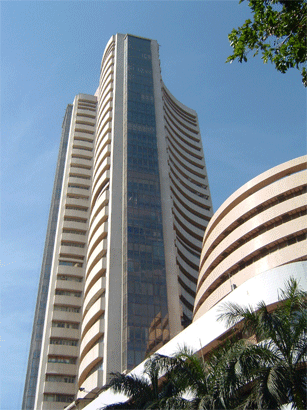 Opening with a negative gap of 146 points at 9,902 on Monday, the Sensex nosedived more than 450 points, as traders cast off frontier banking, metals and realty space. A week back, the Sensex had leaped over 12 percent; and due to a rise in stock market rally - kicking off from the US affecting markets the world over - the Sensex rose more than 23 per cent in the past twelve trading sessions.
TopNews Hindi
- Karuppu, Parasakthi, Thaai Kizhavi, Blast and Kara Among Best Tamil Movies for 2026
- Anupama, YRKKH, Vasudha, Tum Se Tum Tak: सबसे ज़्यादा देखे जाने वाले धारावाहिक
- 2026 FIFA World Cup Current Rankings and Betting Odds for Sports Betting Fans
- JEE Main 2026: Exam Dates, Eligibility, Syllabus जेईई मेन 2026 परीक्षा की तारीखें, योग्यता, सिलेबस
- Geojit ने Apollo Hospitals पर BUY कॉल दोहराया, Share Price Target Rs. 9,587

