Technology News

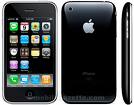
Leakage Of New Safari For iPhone

Recently, the pictures of new MobileSafari for the iPhone OS 2.2 leaked creating a Leakage Of New Safari For iPhone buzz in the mobile industry. The pictures somewhat revealed there have been changes brought by Apple, like removing the magnifying glass and refresh buttons from the top. 

AMD to launch quad-core Shanghai chip ahead of schedule

AMD to launch quad-core Shanghai chip ahead of schedule Los Angeles  - Chip manufacturer AMD aims to challenge rival Intel by launching its Shanghai processor by the end of the year.

The company has learned its lesson and there won't be any of the start-up problems of the kind that afflicted the company's latest Barcelona processor, AMD manager Pat Patla told the CNET media company.

AMD, the world's second biggest chipmaker after Intel, lately suffered billion dollar losses and replaced its top management.

Norway to host Microsoft search engine development centre

Norway to host Microsoft search engine development centre Oslo - Microsoft said Tuesday its main development centre for search engine technology was to be based in Norway.
Chief executive Steve Ballmer made the announcement after a meeting with Norwegian Prime Minister Jens Stoltenberg.

In the short-term, Microsoft was to hire 50 developers and researchers, Stoltenberg said.

Microsoft currently has some 300 employees in Norway, mainly employed by FastSearch & Transfer that the US-based giant acquired earlier this year.

Soon, a tsunami invisibility cloak to protect ocean structures from destruction

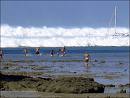
Scientists carry out international tsunami research in Germany London, September 30 : Scientists have shown that it’s possible to make oil rigs or other ocean structures invisible to tsunami waves, with the help of an ‘invisibility cloak’.

Invisibility cloaks that are able to steer light around two dimensional objects have become reality in the last few years.

According to a report in New Scientist, the first real-world application of the theories that made them possible could be in hiding vulnerable coastlines and offshore platforms from destructive tsunamis.

Commercial aquatic plants offer cost-effective method for treating wastewater

Washington, September 30 : Commercial aquatic plants grown in constructed wetlands (CWs) are being touted as inexpensive, low-technology approaches for treating agricultural, industrial, and municipal wastewater to comply with increasingly stringent environmental regulations.

CWs, or marshes built to treat contaminated water, incorporate soil and drainage materials, water, plants, and microorganisms.

“Surface-flow” constructed wetlands resemble shallow freshwater marshes and generally require a large land area for wastewater treatment.

More effective for greenhouse and nursery operations with limited production space and expensive land are a type of constructed wetland called “subsurface flow”.

New machine can capture CO2 in the air at any place on the planet

Washington, September 30 : Scientists have shown that it is possible to reduce carbon dioxide (CO2) using a relatively simple machine that can capture the trace amount of CO2 present in the air at any place on the planet.

The machine has been developed by a team of researchers from the University of Calgary (U of C) in Canada, lead by climate change scientist David Keith.

“At first thought, capturing CO2 from the air where it’s at a concentration of 0.04 per cent seems absurd, when we are just starting to do cost-effective capture at power plants where CO2 produced is at a concentration of more than 10 per cent,” said Keith, Canada Research Chair in Energy and Environment.

Pages