Wakefit Innovations IPO Review by Ventura Securities
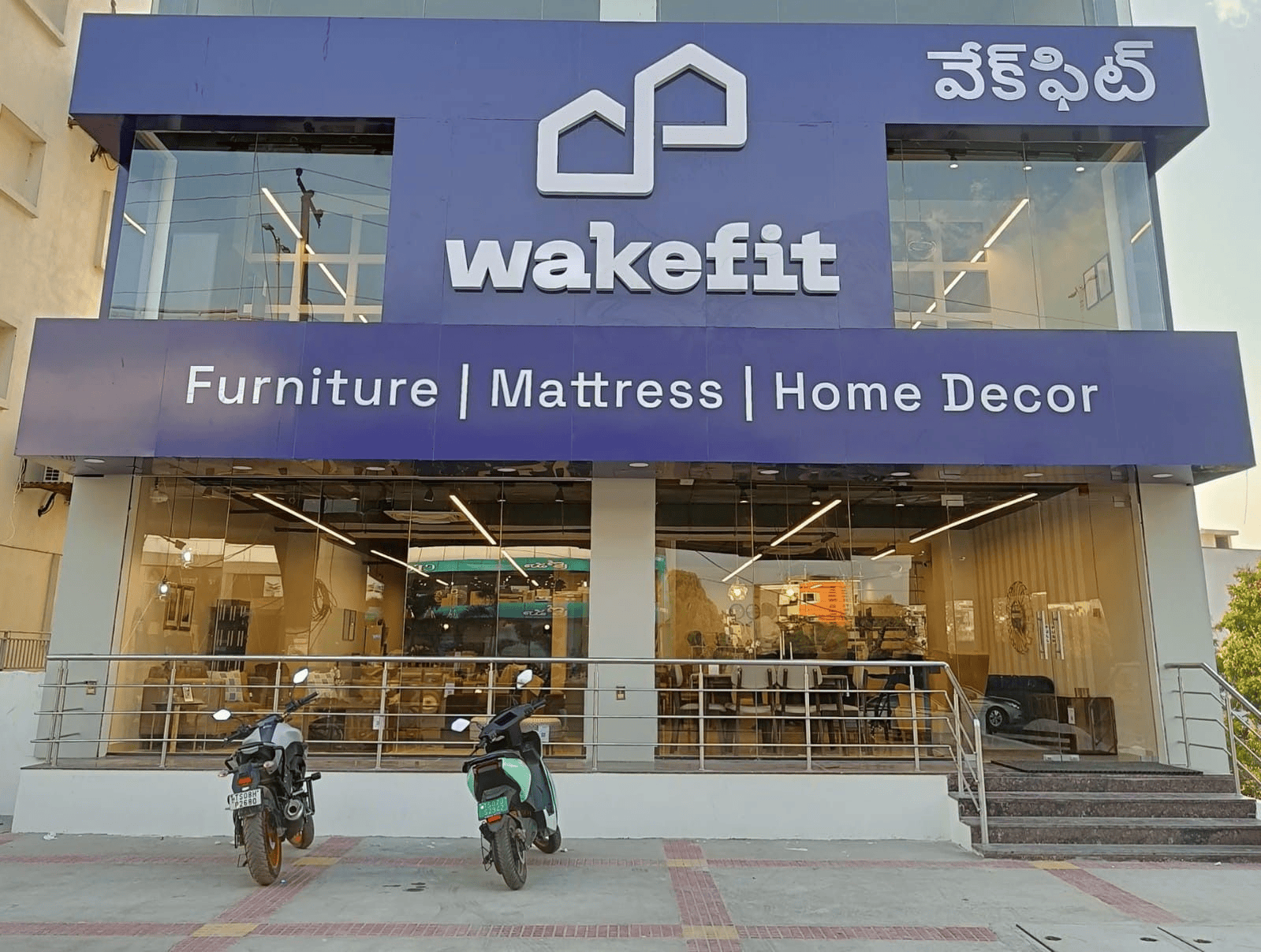
Ventura Securities has issued an IPO note on Wakefit Innovations Limited, a direct-to-consumer home furnishings company launching its public offering between December 8-10, 2025, with a price band of Rs 185-195. The research house maintains a "Not Rated" stance on this Rs 1,288.9 crore offering, highlighting the company's execution-heavy business model and robust revenue trajectory alongside persistent operational challenges. While Wakefit demonstrates impressive full-stack operational capabilities and reduced marketing expenditure from 11.8% to 5.1%, the firm continues grappling with negative returns on equity (-6.7% ROE in FY25) and capital employed (-7.0% ROCE), compounded by geographical concentration risks and thin net margins that warrant cautious investor consideration.
Investment Overview and Offering Structure
Ventura Securities presents an IPO assessment for Wakefit Innovations Ltd., positioning the offering within India's burgeoning home furnishings sector. The issue comprises a fresh issuance of Rs 911.71 crore coupled with an offer-for-sale component aggregating Rs 1,288.89 crore, bringing the post-issue market capitalization to Rs 6,373.16 crore. The subscription window opens December 8, closing December 10, with shares priced between Rs 185-195 per equity share. Qualified institutional buyers command a minimum 75% allocation, while non-institutional investors receive up to 15% and retail participants secure the remaining 10% of the net offer.
Promoters Ankit Garg and Chaitanya Ramalingegowda currently maintain 43.1% pre-IPO equity, which dilutes to 36.8% post-listing, while marquee institutional backers including Peak XV, Verlinvest, Investcorp, Elevation Capital, Paramark KB and SAI Global constitute the remaining shareholding. The market lot stands at 76 shares with a face value of Rs 1 per equity share.
Operational Architecture and Competitive Moat
Wakefit's differentiation emerges from its vertically integrated infrastructure spanning design, manufacturing and last-mile delivery capabilities. The company operates through one mother warehouse, seven inventory holding points and 18 points of delivery, complemented by proprietary fleet management and trained installation personnel. This operational infrastructure creates formidable barriers to replication, enabling scalable production capacity, predictable installation timelines and efficient inventory optimization across the supply chain.
The company's revenue composition reflects strategic diversification across mattresses (60%), furniture (30%) and furnishings (10%), with furniture emerging as the fastest-growing, structurally higher-margin category. Notably, furniture constitutes 66% of India's home and interiors market, positioning this segment as Wakefit's most significant long-term opportunity. The firm bolsters its omnichannel presence through 125+ company-owned, company-operated stores, leveraging a mattress-led customer acquisition flywheel that reduces per-customer acquisition costs.
Financial Performance and Trajectory
Revenue expansion demonstrates robust momentum, advancing at a 26.27% compound annual growth rate between FY22 and FY25. Consolidated revenues climbed from Rs 632.6 crore in FY22 to Rs 1,273.7 crore in FY25, reflecting 29.1% year-over-year growth in the most recent fiscal period. Raw material costs improved from 59.1% of sales in FY22 to 45.0% in FY25, indicating enhanced operational efficiency and procurement leverage.
| Financial Metric | FY22 | FY23 | FY24 | FY25 |
|---|---|---|---|---|
| Revenue (Rs Cr) | 632.6 | 812.6 | 986.4 | 1,273.7 |
| EBITDA Margin (%) | -12.4 | -11.3 | 3.7 | 4.7 |
| Net Profit (Rs Cr) | -106.5 | -145.7 | -15.1 | -35.0 |
| ROE (%) | -31.2 | -28.8 | -2.8 | -6.7 |
| ROCE (%) | -30.1 | -27.6 | -5.0 | -7.0 |
The company achieved EBITDA positivity in FY24, expanding margins to 4.7% in FY25 from deeply negative territory in prior years. Marketing intensity declined substantially from 11.8% of revenue in FY23 to merely 5.1% in H1FY25, demonstrating enhanced brand recognition and reduced customer acquisition dependency. Nevertheless, the firm delivered a Rs 35 crore loss in FY25, with negative return on equity at -6.7% and return on capital employed at -7.0%.
Capital Deployment Strategy
Proceeds from the fresh issuance earmark Rs 377.18 crore toward strategic capacity expansion and brand amplification initiatives. The allocation blueprint designates Rs 30.8 crore for establishing 117 new company-owned, company-operated regular stores, augmenting the existing retail footprint. An additional Rs 161.4 crore addresses lease, sub-lease rent and license fee obligations for existing stores, securing operational continuity.
Capital expenditure of Rs 15.4 crore targets procurement of new equipment and machinery to enhance manufacturing capabilities. Marketing and advertisement expenditure commands Rs 108.4 crore to elevate brand awareness across target demographics, while Rs 61.18 crore remains allocated for general corporate purposes.
Risk Factors and Geographical Constraints
Category concentration and geographical imbalances present material headwinds to sustainable profitability expansion. Mattress dependence constitutes 60% of total revenue, creating heightened vulnerability to category-specific disruptions or competitive encroachment. The company's presence remains disproportionately southern-focused, with inadequate penetration in northern and northeastern markets limiting addressable market expansion.
Thin net margins persist despite EBITDA improvement, while working capital pressures constrain financial flexibility. The firm faces susceptibility to premium positioning competitors and design-led differentiation strategies that could erode market share. Expanding manufacturing and distribution capacity emerges as essential to reducing logistics costs and improving profitability metrics, though such initiatives require substantial capital commitments with uncertain return timelines.
Valuation Metrics and Investment Considerations
Trading multiples reflect elevated premium valuations relative to profitability generation, warranting measured investor approach. At the upper price band of Rs 195, the post-issue market capitalization reaches Rs 6,373.16 crore. The company's adjusted earnings per share remained negative at Rs -1.1 in FY25, precluding traditional price-to-earnings assessments. Book value per share stood at Rs 15.9 in FY25, implying a price-to-book multiple of approximately 12.2x at the upper price band.
Enterprise value-to-EBITDA multiples demonstrate compression from historically elevated levels, though profitability sustainability remains unproven across economic cycles. Cash flow from operations generated Rs 76.7 crore in FY25, translating to an adjusted cash flow per share of Rs 2.3, while free cash flow turned negative at Rs -0.3 per share due to intensified capital expenditure. Working capital efficiency improved substantially, with net working capital days declining from 39 in FY22 to merely 4 days in FY25.

